
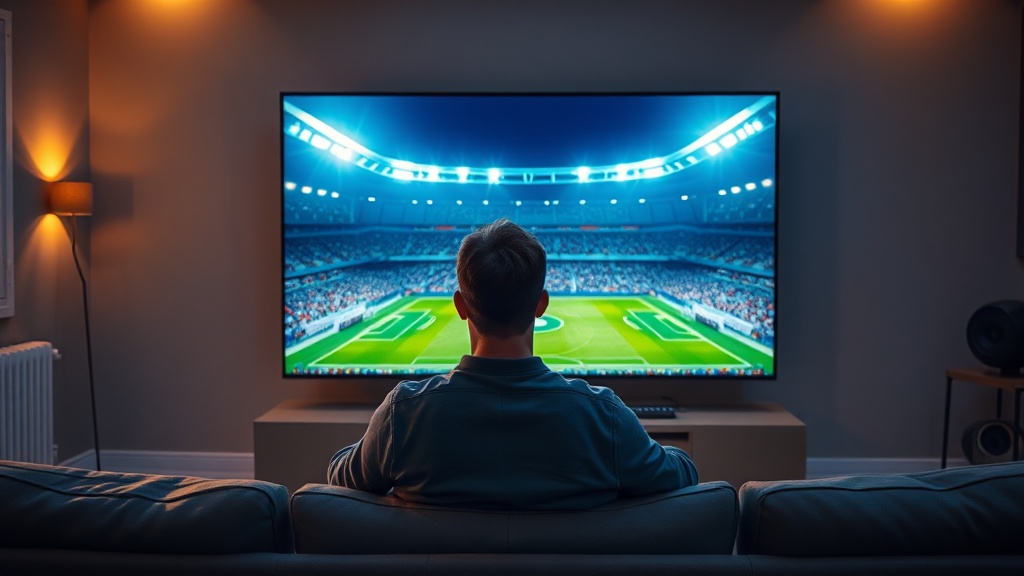
iptv tv is no longer just a buzzword; it’s the present and future of television. In 2026, the landscape of home entertainment is dominated by the unparalleled flexibility and vast content libraries offered by iptv tv. This comprehensive guide will delve deep into everything you need to know about iptv tv, from its core technology to how to choose the best service for your needs, ensuring you’re fully equipped to embrace this revolutionary viewing platform. The evolution of iptv tv has brought with it an unprecedented level of choice and control for consumers worldwide.
Table of ContentsUnderstanding the Basics of IPTV TV: What is it, Really?Key Advantages of Embracing IPTV TV in 2026Choosing the Best IPTV TV Service: What to Look ForSetting Up Your IPTV TV System: A Step-by-Step GuideThe Future of IPTV TV: Innovations and Trends for 2026 and BeyondTroubleshooting Common IPTV TV IssuesFAQs About IPTV TVRelated IPTV Services
Understanding the Basics of IPTV TV: What is it, Really?
IPTV, or Internet Protocol Television, delivers television content over Internet Protocol networks. Unlike traditional broadcast, cable, or satellite television, iptv tv uses your existing internet connection to stream live and on-demand programming. This fundamental difference unlocks a world of possibilities, allowing for features like video-on-demand (VOD), time-shifted TV, and interactive services that are simply not feasible with older technologies. Think of it as a highly advanced form of streaming, specifically tailored for television content.
The core principle behind iptv tv is packet-switched networking. Instead of broadcasting signals indiscriminately, iptv tv sends data in small packets, much like how your web browser receives information. This allows for more efficient use of bandwidth and enables a two-way communication channel between the provider and the viewer. This interactive capability is what powers many of the advanced features we now associate with modern television.
One of the significant advantages of iptv tv is its ability to offer a personalized viewing experience. You’re not limited to a fixed schedule; instead, you can watch what you want, when you want. This on-demand nature is a game-changer, especially for those with busy lifestyles. Furthermore, the quality of iptv tv can often surpass traditional broadcasts, with many services offering stunning 4K and even 8K resolution, provided you have a fast enough internet connection.
The infrastructure supporting iptv tv has also matured significantly. Content delivery networks (CDNs) are more robust, ensuring minimal buffering and a smooth viewing experience even during peak times. Security protocols have also advanced, protecting both content providers and consumers. This robust backend is crucial for the consistent and high-quality delivery of iptv tv services.
In essence, iptv tv is a sophisticated digital media delivery system that leverages the internet to provide a superior, more flexible, and interactive television experience. It’s a departure from the one-way communication of traditional TV, ushering in an era of personalized and on-demand entertainment for all.
Key Advantages of Embracing IPTV TV in 2026
The benefits of switching to iptv tv in 2026 are numerous and compelling. Firstly, the sheer volume and variety of content available are unparalleled. Traditional television often limits you to a few hundred channels, but iptv tv services can offer thousands, including niche international channels, sports packages, and a vast library of movies and TV shows on demand. This expanded choice means there’s always something for everyone in the household.
Secondly, cost-effectiveness is a major draw. Many iptv tv providers offer competitive pricing plans that can significantly undercut traditional cable or satellite subscriptions. With customizable packages, you often only pay for the channels you actually want to watch, avoiding hefty bills for unused content. To explore different pricing options, you might want to visit FlexIPTV’s pricing page.
Flexibility in viewing is another critical advantage. With iptv tv, you’re not tied to a single television set. You can watch your favorite shows and movies on a multitude of devices, including smart TVs, smartphones, tablets, laptops, and streaming boxes. This multi-device compatibility ensures that your entertainment is always accessible, whether you’re at home or on the go.
Advanced features are standard with iptv tv. These include pausing and rewinding live TV, recording shows to watch later, and accessing electronic program guides (EPGs) that provide detailed information about upcoming broadcasts. Many services also offer multi-screen viewing, allowing you to watch different channels on different devices simultaneously, a truly modern approach to television consumption.
Finally, the quality of the viewing experience has drastically improved. With faster internet speeds becoming more common, iptv tv providers can deliver content in stunning HD, Full HD, and even 4K resolutions. This visual fidelity, combined with often superior audio quality, makes for a truly immersive entertainment experience that traditional broadcasting struggles to match. The future of television is undoubtedly in the hands of robust iptv tv solutions.
Choosing the Best IPTV TV Service: What to Look For

With a plethora of iptv tv providers available in 2026, selecting the right one can seem daunting. However, by focusing on a few key criteria, you can make an informed decision that meets your entertainment needs. The first and most crucial factor is the quality and stability of the stream. Look for providers known for reliable service, minimal buffering, and consistent high-definition content. Reviews and testimonials can be incredibly helpful here.
The range of channels and content library is also paramount. Consider what you and your family typically watch. Do you need specific sports channels, international programming, or a vast movie library? Compare the offerings of different iptv tv providers to ensure they align with your viewing preferences. Some providers specialize in certain genres, so do your research carefully.
Device compatibility is another critical consideration. Ensure the iptv tv service supports the devices you plan to use, whether it’s a smart TV, a streaming stick, a smartphone, or a computer. Many providers offer dedicated apps, while others rely on third-party players. You can find more information about supported devices on pages like FlexIPTV’s devices page.
Customer support is often overlooked but becomes vital when issues arise. A responsive and knowledgeable support team can save you a lot of frustration. Look for providers that offer multiple support channels, such as live chat, email, or phone support, and have a good reputation for resolving problems efficiently.
Finally, pricing and subscription models should be evaluated. While cost-effectiveness is a benefit of iptv tv, ensure the pricing is transparent and there are no hidden fees. Consider whether monthly, quarterly, or annual plans offer the best value for your budget. Some providers offer free trials, which are an excellent way to test the service before committing. Making the right choice for your iptv tv needs requires careful consideration.
Setting Up Your IPTV TV System: A Step-by-Step Guide
Getting started with iptv tv is surprisingly straightforward, even for those who aren’t tech-savvy. The first step, after choosing your provider, is to ensure you have a stable and fast internet connection. A minimum of 25-50 Mbps is generally recommended for smooth HD streaming, with higher speeds needed for 4K content. A wired Ethernet connection is always preferable to Wi-Fi for optimal performance and less latency when enjoying iptv tv.
Next, you’ll need a compatible device. This could be a smart TV with a built-in iptv tv app, a dedicated streaming box like an Amazon Fire Stick, Nvidia Shield, or Apple TV, or even a smartphone or tablet. Most iptv tv providers offer instructions or their own branded applications to facilitate installation on various platforms. If you’re looking for a wide variety of channels, you can check out FlexIPTV’s channels page.
Once you have your device, you’ll typically need to install the provider’s application or a compatible third-party player. This usually involves downloading it from an app store or directly from the provider’s website. Follow the on-screen instructions for installation, which are generally very user-friendly. Some providers might require you to sideload their app, which involves a few extra steps but is still manageable.
After installation, you’ll need to enter your subscription details, which usually include a username, password, or an M3U playlist URL provided by your iptv tv service. This is the crucial step that links your device to the provider’s content servers. Ensure you enter these details accurately to avoid connection issues. Once entered, the application will typically load your channel list and VOD library.
Finally, explore the interface, familiarize yourself with the electronic program guide, and start enjoying your new iptv tv experience. Most apps are designed to be intuitive, allowing for easy navigation between live channels, on-demand content, and recording options. If you encounter any issues, refer to your provider’s support resources or their setup guides. The process of setting up iptv tv is becoming increasingly streamlined.
The Future of IPTV TV: Innovations and Trends for 2026 and Beyond
The evolution of iptv tv is far from over. In 2026, we’re already seeing significant advancements, and the horizon promises even more exciting innovations. One major trend is the integration of artificial intelligence (AI) to personalize content recommendations. AI algorithms will analyze your viewing habits to suggest shows, movies, and even live events that perfectly match your tastes, creating an even more bespoke iptv tv experience.
Virtual Reality (VR) and Augmented Reality (AR) are also poised to transform iptv tv. Imagine watching a live sports event from a VR headset, feeling like you’re actually in the stadium, or having AR overlays provide real-time statistics and player information. While still in nascent stages for mainstream TV, these technologies will undoubtedly enhance immersion and interactivity for select iptv tv content.
Another significant development is the increasing focus on ultra-low latency streaming. This is particularly crucial for live events like sports, where even a few seconds of delay can impact the viewing experience. Providers are investing heavily in technologies that minimize latency, ensuring that iptv tv viewers are as close to real-time as possible. This commitment to speed is vital for the future of iptv tv.
The rise of 8K content is also on the horizon. While 4K is becoming standard, 8K televisions are entering the market, and iptv tv providers will be at the forefront of delivering content in this incredibly high resolution. This will demand even faster internet speeds and more robust infrastructure, pushing the boundaries of what’s possible in home entertainment. The quality of iptv tv will only continue to improve.
Finally, the convergence of iptv tv with smart home ecosystems will become more seamless. Imagine controlling your TV with voice commands, integrating your viewing schedule with your smart calendar, or having your home lighting adjust automatically based on the content you’re watching. The future of iptv tv is intelligent, immersive, and deeply integrated into our digital lives, offering an unparalleled entertainment hub.
Troubleshooting Common IPTV TV Issues
While iptv tv offers a superior viewing experience, occasional issues can arise. Knowing how to troubleshoot common problems can save you time and frustration. The most frequent issue is buffering or freezing. This is almost always related to your internet connection. First, check your internet speed using an online test. If it’s below the recommended speed for your content, try restarting your router and modem. If the problem persists, contact your internet service provider (ISP). Sometimes, switching from Wi-Fi to a wired Ethernet connection can dramatically improve stability for iptv tv.
Another common problem is specific channels not loading or displaying a black screen. This could be due to a temporary server issue on the provider’s end, or it might indicate that the channel is geo-restricted. First, try restarting your iptv tv application or device. If that doesn’t work, check if other channels are working. If only a few are affected, it’s likely a provider-side issue. You can often find status updates on your provider’s website or social media. For geo-restrictions, a VPN might be a solution, but check your provider’s terms of service regarding VPN usage.
Login issues, such as incorrect username or password errors, are usually straightforward to fix. Double-check your credentials for any typos. If you’ve forgotten your password, use the “forgot password” option if available, or contact your iptv tv provider’s support. Ensure your subscription is active and hasn’t expired. Sometimes, simply logging out and logging back in can resolve minor authentication glitches.
Picture quality problems, like pixelation or low resolution, can stem from several sources. Again, your internet speed is a primary suspect. If your speed is adequate, check the settings within your iptv tv app. Ensure it’s set to stream at the highest available quality. Also, verify that your display device (TV, monitor) is capable of the resolution you’re trying to stream. Sometimes, outdated app versions can also cause display issues, so ensure your app is always updated. These simple steps can often resolve most iptv tv viewing difficulties.
FAQs About IPTV TV
Q1: Is IPTV TV legal?
A1: Yes, IPTV itself is a legal technology. Its legality depends entirely on the source of the content. If you subscribe to a legitimate IPTV service that has the proper licensing rights to distribute the content, then it is legal. However, using services that offer copyrighted content without authorization is illegal.
Q2: What internet speed do I need for IPTV TV?
A2: For standard definition (SD) content, 10-15 Mbps is usually sufficient. For high definition (HD) content, 25-50 Mbps is recommended. For 4K Ultra HD content, you’ll ideally need 50 Mbps or higher for a smooth, buffer-free experience. A stable connection is more important than just raw speed.
Q3: Can I watch IPTV TV on multiple devices simultaneously?
A3: Most legitimate IPTV providers offer plans that allow for multiple simultaneous streams, though the number of allowed devices can vary by subscription package. Always check with your specific provider regarding their multi-device policy and limitations for their iptv tv service.
Q4: Do I need a special box for IPTV TV?
A4: Not necessarily. While dedicated IPTV boxes (like Android boxes or MAG devices) are popular, you can also watch IPTV on smart TVs (through apps like Smart IPTV or GSE Smart IPTV), smartphones, tablets, computers, and other streaming devices like Amazon Fire Sticks or Apple TVs. The exact method depends on your chosen iptv tv provider.
Q5: What’s the difference between IPTV TV and streaming services like Netflix?
A5: While both use internet streaming, the key difference lies in content and delivery. Netflix primarily offers on-demand movies and TV shows from its own library. IPTV TV, on the other hand, often focuses on delivering live television channels, similar to traditional cable, but over the internet, alongside a VOD library. Many iptv tv services also offer catch-up TV and time-shifted viewing.
Related IPTV Services
You may also visit the following websites for similar services: